15 Na Disorders
_..


both results lead to brain symptoms
Hyponatremia
_..

_..

Plasma osmolality
_..


albumin minor contributor, not in equation, more important for oncotic pressure
_..


_..
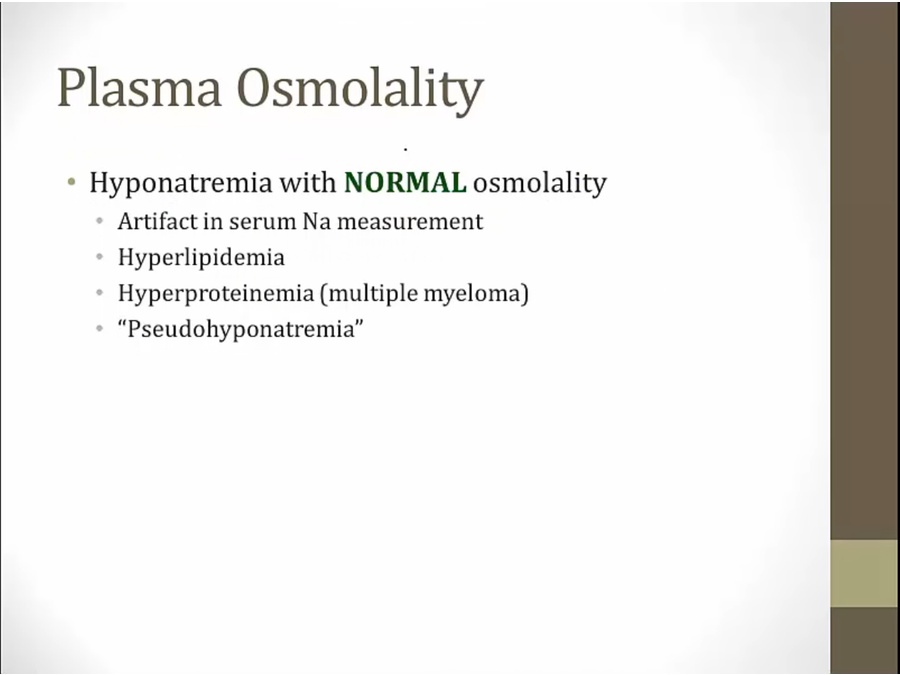
substances interfere with Na measurement
triglycerides
post-TURP
_..
low osmolality: unknown cause

Low usine osm: post TURP, beer potomonia
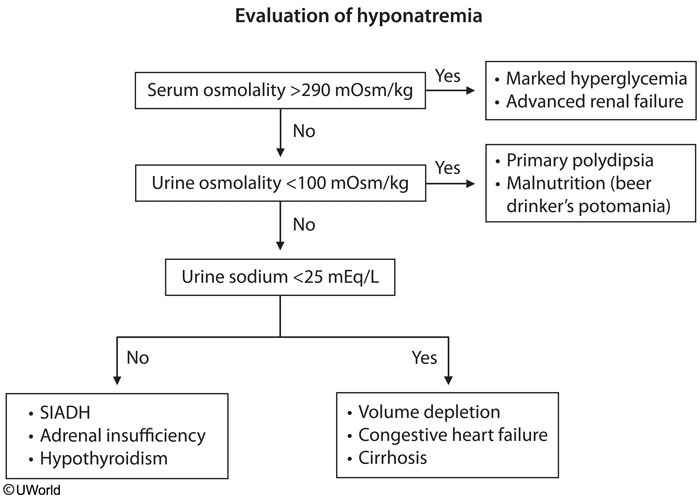

Urinary Sodium
_..
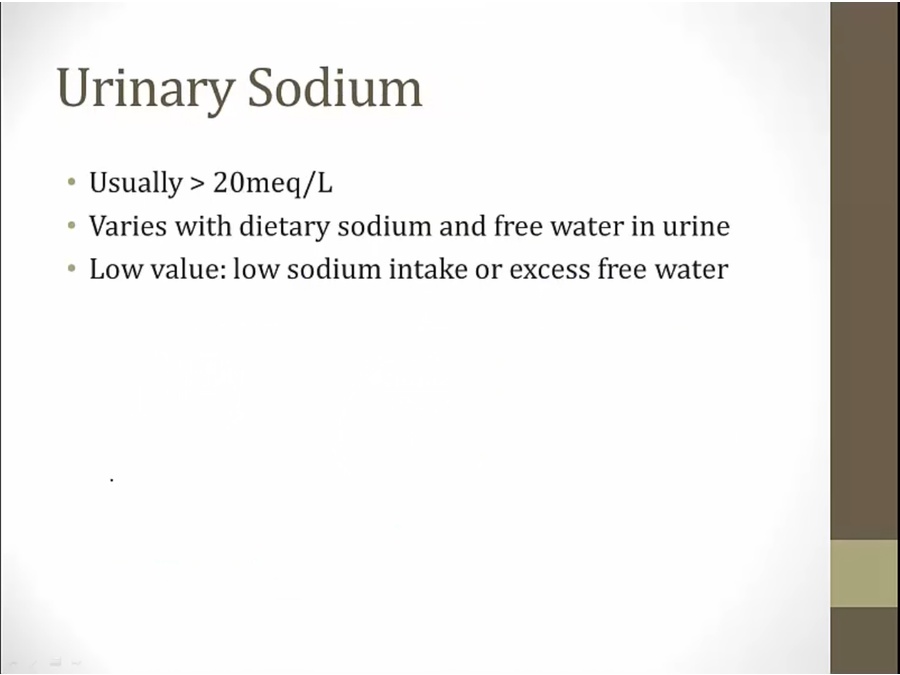
in reality, no normal levels because varies
intake equals excretion
urine Na < 10: extrarenal including CHF, cirrhosis, nephrotic syndrome
urine > 20: renal including AKI, CKD
Patients with SIADH are typically euvolemic; therefore, urine sodium concentration is typically elevated (>40 mEq/L), unlike in patients with hypovolemia.
Urinary Osmolality
_..


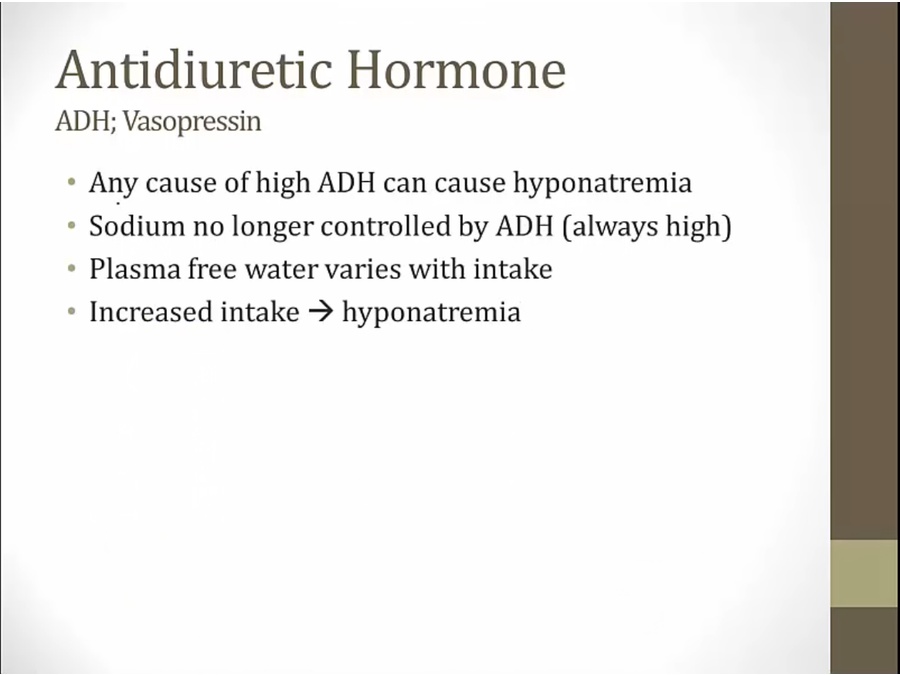
ADH controls above 3 tests

_..
_..

if body responding appropirately
urinary Na may vary with dietary intake

Causes
_..

HF
_..

high Uosm because ADH high
Renal Failure
_..

renal failure: concentrated urine even at baseline. Can't excrete water
Diuretics
_..

hyponatremia common with thiazides

loop diuretic effect:
decreased Na absorption, increased osm at CD, decreased Na/water absorption
interstitial high osm eliminated, lower driving force to remove water
result: very hard to reabsorb water and become hyponatremic
thiazide:
Na blocked, increased osm at CD, decreased water/Na absorption
medullary osm intact: continue to maintain ability to absorb free water
result: excrete Na but absorb water = hyponatremia

ADH
_..

reason why athletes drink Gatorade and not water

hypothyroidism: high ADH with low thyroid
_..


no crackles, ankle edema
_..

stroke, brain bleeds, tumor
any kind of pulmonary diseases, small cell lung cancer

Inappropriately wet head: cyclophosphamide can cause hyponatremia due to SIADH
_..
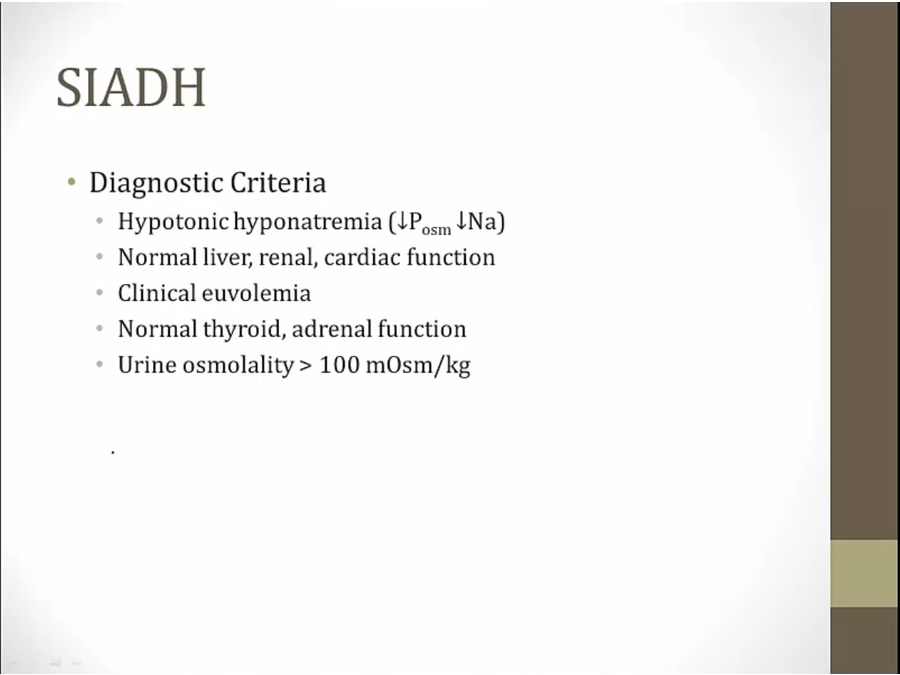
clinical euvolemia: absence of signs
_..

Psychogenic
_..

Diets
_..

common theme: little Na ingestion
kidney must maintain minimum osm
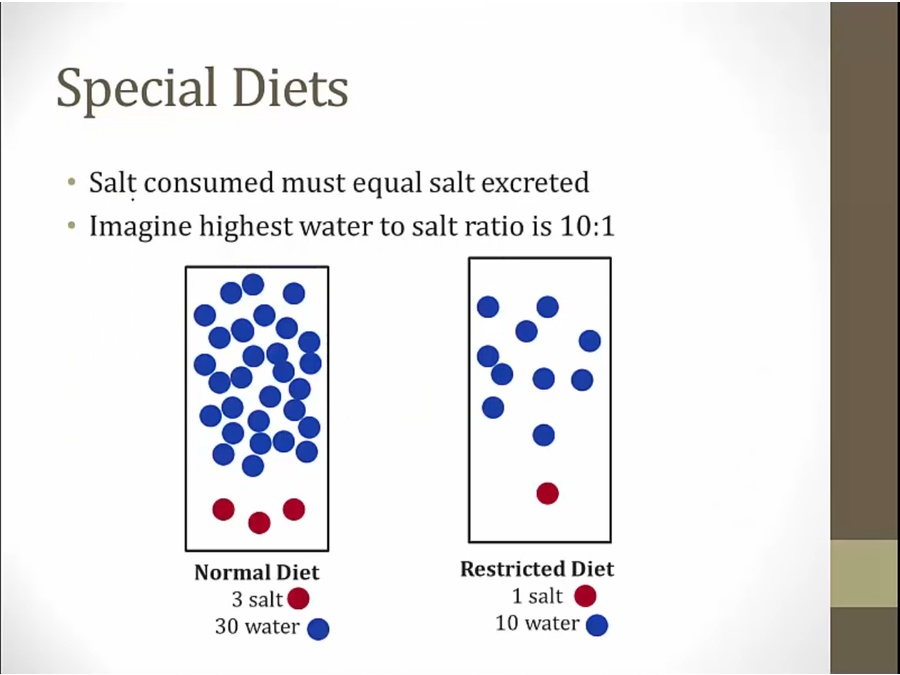
pt on restricted diet can only excrete 10 water

_..

Summary
Volume and Osm
_..
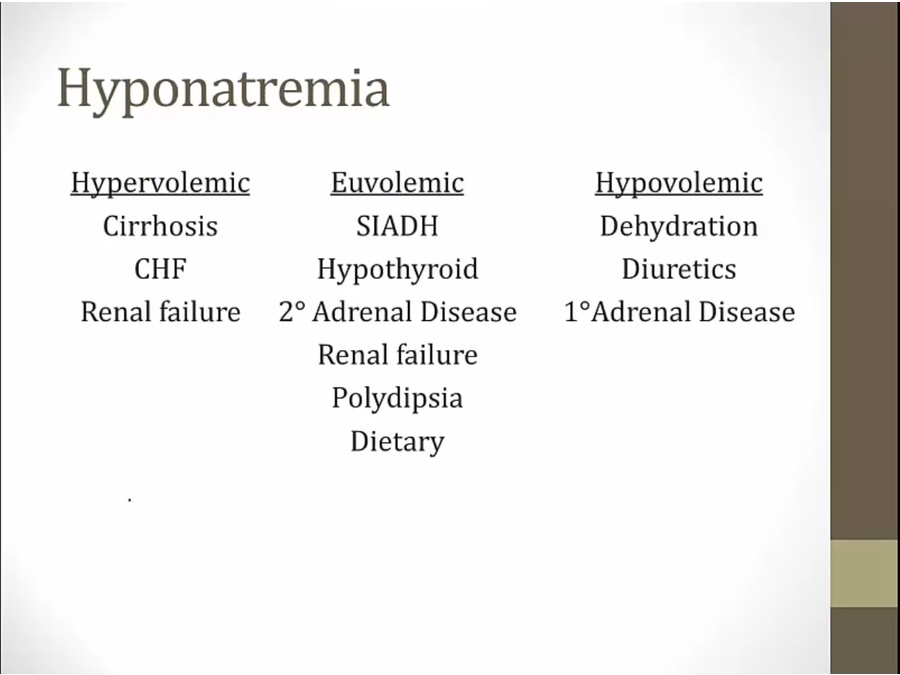
hypervolemic: physical exam signs
_..
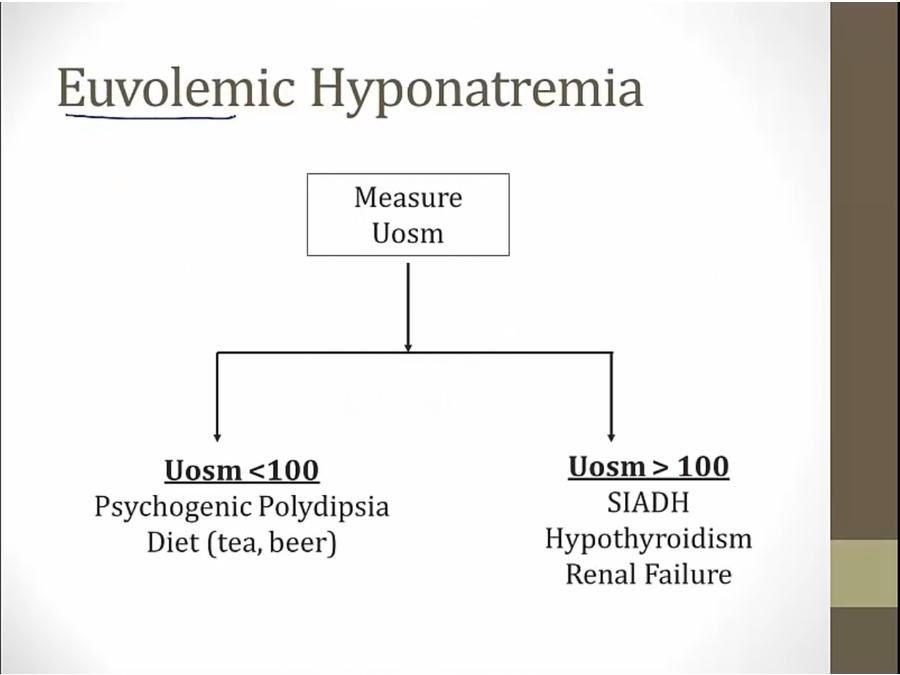
low Uosm: kidney response normal
_..

measure UNa to differentiate
ADH and Osm
_..
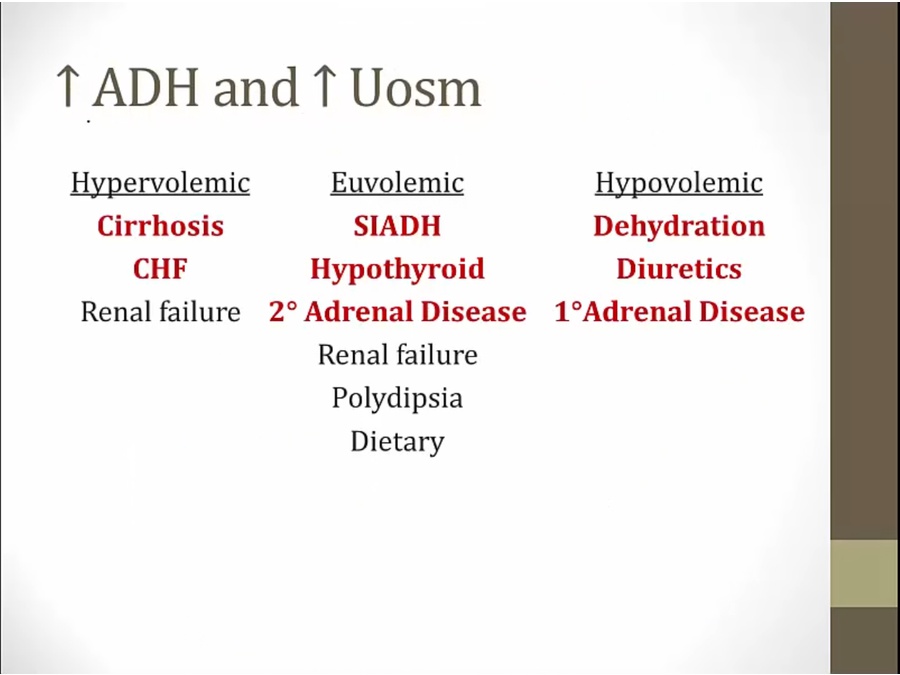
red
_..

_..
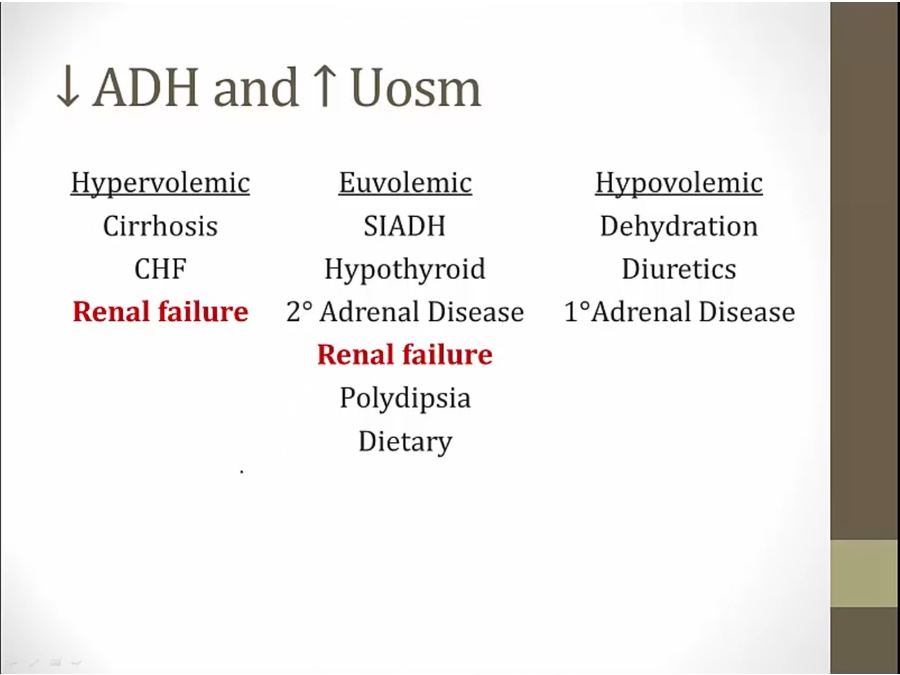
Treatment
_..


acute hyponatremia: correct as fast as can (e.g. surgery causes low Na)
chronic hyponatremia: correct slow
high risk: alcoholics, liver disease, malnutritioned, hypokalemia
10 meq correction 1st day
Hypernatremia
_..

_..

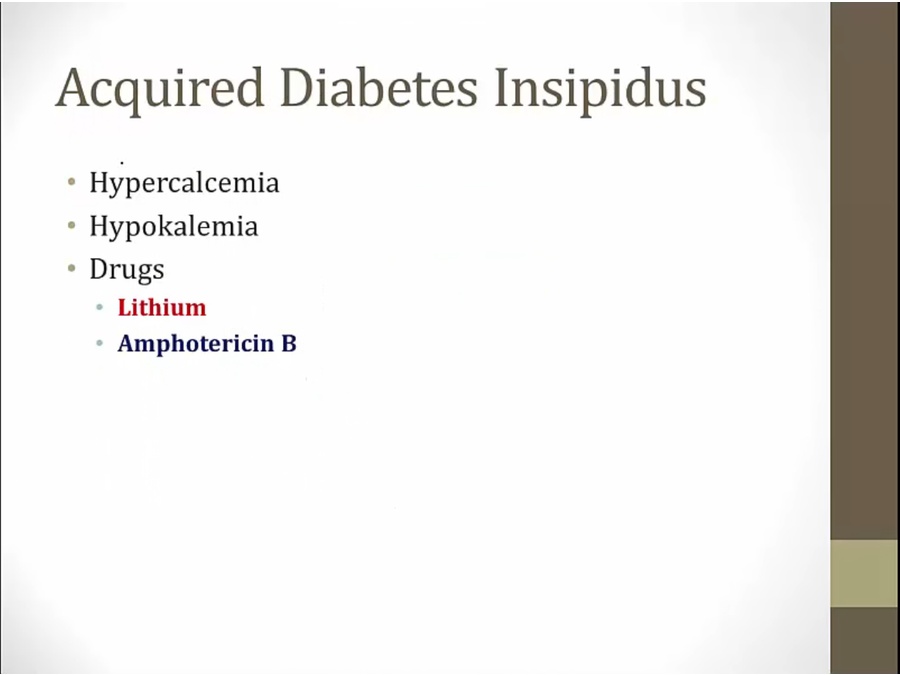
DI
_..

_..

hypernatremia happen in central lesion
_..

_..

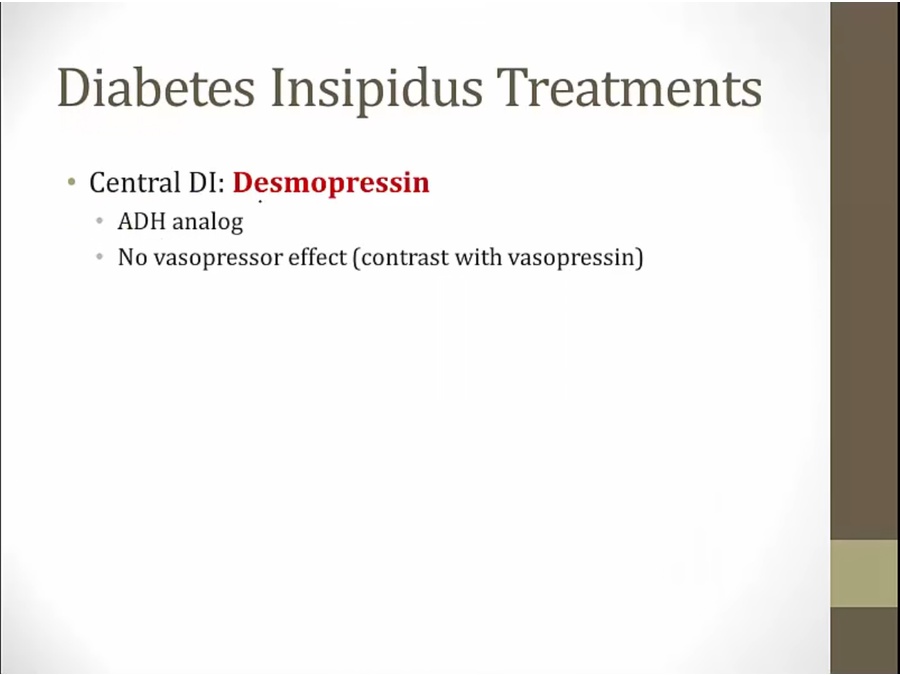
won't raise bp
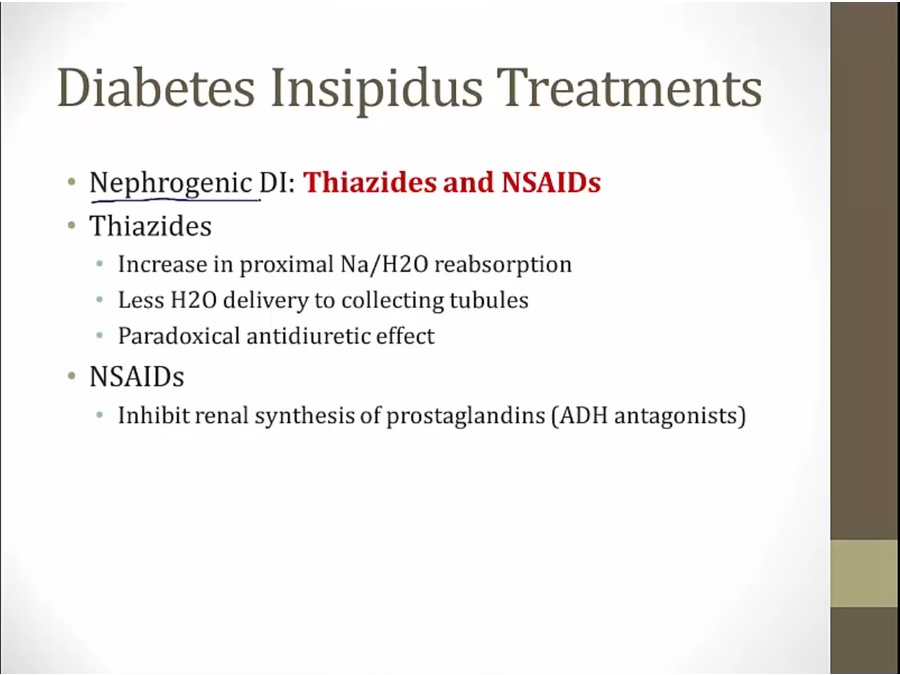
thiazide, endomethacin (NSAID), amiloride
Treatment
calculate free water deficit
Last updated